
Veterinary Appointment Software: Why Booking Is Only Half the Battle
For most veterinary clinics, getting appointments on the calendar isn’t the only challenge.
The bigger problem is everything that can happen after an appointment is booked.
A client forgets to confirm. Someone cancels first thing in the morning, leaving an opening your team doesn’t have time to fill. A pet becomes overdue for care and quietly disappears from the schedule. Or your front desk spends valuable time calling, texting, rescheduling, and updating records just to keep the day on track.
These gaps may seem small individually, but over time, they can add up to significant lost revenue and unnecessary work for your team.
That’s why clinics evaluating scheduling technology should look beyond whether clients can book an appointment online. The better question is:
What happens after they book?
The Hidden Cost of an Appointment That Doesn’t Happen
An empty appointment slot isn’t just an opening on the calendar. It represents time your team planned for, capacity that could have gone to another patient, and revenue the clinic expected to generate.
No-shows are an obvious example, but they aren’t the only way appointment opportunities slip through the cracks.
Consider what happens when:
- A client never confirms an upcoming appointment
- A same-day cancellation leaves an unexpected opening
- Someone needs to reschedule but doesn’t immediately choose another time
- A client is waiting for an earlier appointment but never hears about the new opening
- A patient becomes overdue for care without anyone following up
- A completed appointment requires manual follow-up from your team
When these situations depend on someone at the clinic noticing and taking action, it’s easy for opportunities to get missed — especially when the front desk is already balancing phones, clients, patients, messages, and dozens of other responsibilities.
Most Scheduling Tools Focus on Getting Clients Onto the Calendar
Online booking can make scheduling significantly easier for both veterinary teams and pet owners.
Clients can find an available appointment without calling the clinic, and staff can spend less time coordinating schedules over the phone.
But booking is only the beginning of the appointment lifecycle.
Traditional scheduling workflows often look something like this:
Client books → Client receives reminder → Appointment happens
That works when everything goes according to plan.
Veterinary medicine rarely works that way.
Clients cancel. Schedules change. People forget. Patients become overdue. Openings appear unexpectedly. And when your technology isn’t built to respond to those changes, the responsibility falls back on your team.
That’s where appointment automation can make a much bigger difference.
What Should Appointment Automation Actually Do?
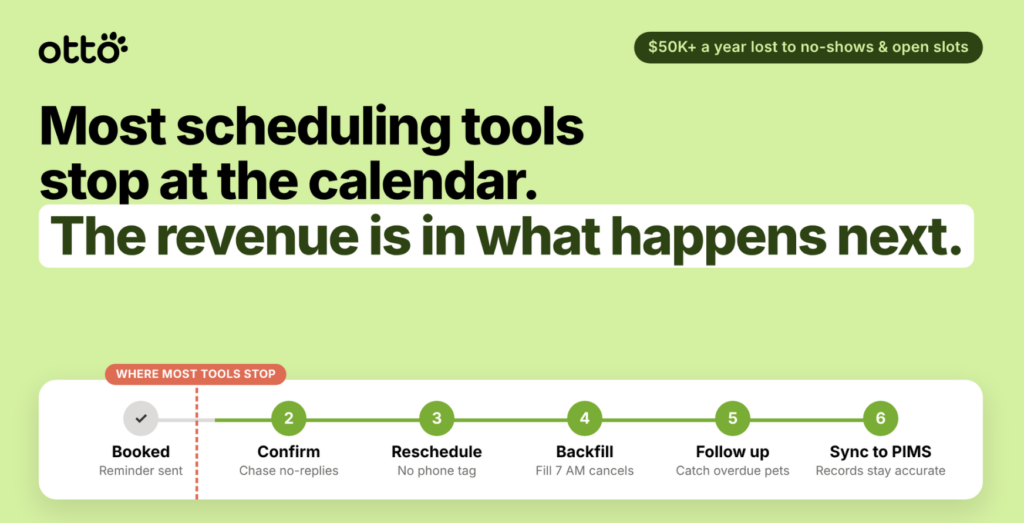
Effective appointment automation should help manage the entire journey from booking through follow-up — not simply put an appointment on the calendar.
Here are some of the capabilities veterinary clinics should consider when evaluating their scheduling and communication technology.
1. Automatically Confirm Upcoming Appointments
Your team shouldn’t have to spend hours calling clients to confirm tomorrow’s schedule.
Automated appointment confirmations can proactively reach out to clients and make it easier for them to confirm their visit. More importantly, your team can identify unconfirmed appointments earlier instead of discovering a potential no-show when the appointment time arrives.
That gives the clinic more time to take action.
2. Make Rescheduling Easy
When changing an appointment is difficult, clients may put it off — or simply never reschedule.
Giving clients an easier way to select another available appointment can help keep them connected to your clinic while reducing the back-and-forth required from staff.
The goal isn’t just to know that someone canceled. It’s to help move that client into another appropriate opening.
3. Help Fill Last-Minute Cancellations
A cancellation doesn’t necessarily have to become an empty appointment slot.
If your clinic has clients who want earlier appointments or patients waiting to get onto the schedule, automation can help connect those openings with existing demand.
Instead of asking a team member to work through a call list every time an appointment becomes available, technology can help streamline the process of finding someone who wants the opening.
That can turn a cancellation from lost capacity into another opportunity to provide care.
4. Follow Up With Overdue and Lapsed Patients
Some of the most important gaps in a clinic’s schedule aren’t visible on today’s calendar.
They’re the patients who aren’t on it at all.
A patient may come in for an annual wellness exam and then quietly go 14, 16, or 18 months without returning. Without a reliable system for identifying and contacting overdue patients, those clients can easily fall through the cracks.
Automated lapsed-client outreach can help clinics reconnect with those pet owners and encourage them to schedule needed care before they become permanently disengaged.
It’s good for clinic revenue, but more importantly, it helps keep patients connected to ongoing veterinary care.
5. Keep Your PIMS Up to Date
Automation only saves time if your systems stay aligned.
If appointment confirmations, cancellations, client updates, and other activity happen in one platform but don’t make it back to your practice information management system, staff may still have to update records manually.
That creates duplicate work and increases the chance that someone is looking at outdated information.
When evaluating appointment technology, look at how information flows back into your PIMS — including how quickly those updates happen.
The goal should be to reduce manual work, not simply move it from one system to another.
The Best Automation Removes Things Your Team Has to Remember
Veterinary teams already have enough to keep track of during the day.
They shouldn’t also have to remember:
Did we follow up with that unconfirmed appointment?
Did anyone call the cancellation list?
Did that client ever reschedule?
Did we update the PIMS?
Has that patient been back for their annual exam?
Each individual task may only take a few minutes. The problem is the sheer number of them — and the mental load required to remember when each one needs to happen.
That’s one of the biggest opportunities with appointment automation.
It isn’t simply about doing things faster. It’s about creating workflows that continue moving even when someone on your team isn’t manually pushing them forward.
More Predictable Schedules Start With Better Systems
A completely full calendar doesn’t necessarily mean a clinic has an efficient appointment workflow.
If your team has to constantly chase confirmations, react to cancellations, call overdue clients, update records, and manually fill openings, that full calendar may require a significant amount of work to maintain.
Instead, clinics should think about the entire appointment lifecycle:
Booking → Confirmation → Appointment changes → Visit → Follow-up → Rebooking
Where does your team still have to intervene manually? Where can a client quietly drop out of the process? And what happens when something doesn’t go according to plan?
Those questions can reveal much more about the effectiveness of your scheduling technology than simply asking whether it offers online booking.